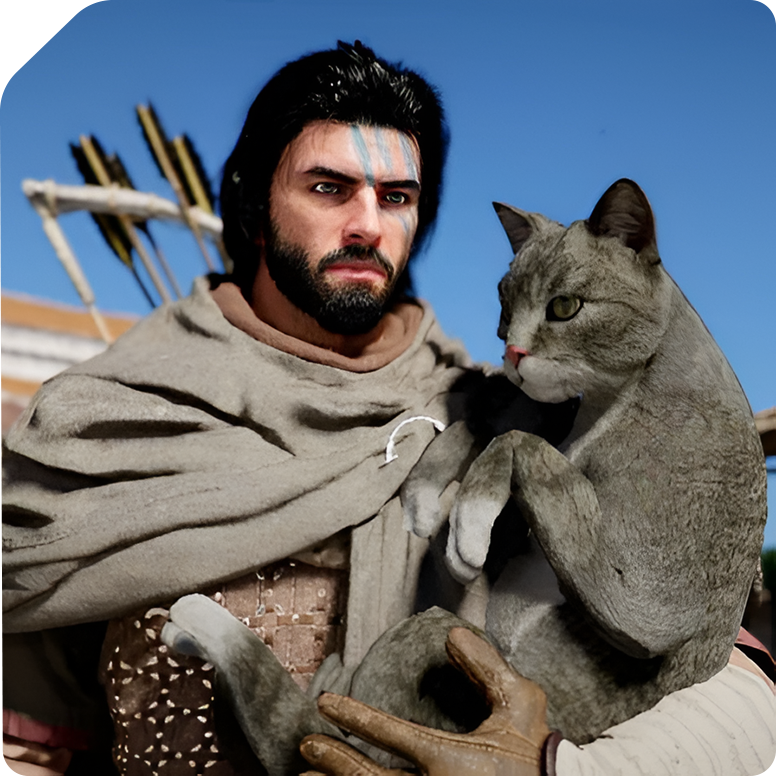
Designing Companion Systems: Crimson Desert

In modern game development, companion systems are no longer just optional features—they are powerful tools for emotional engagement. From AAA open-world experiences to indie titles, developers are increasingly using companions to deepen immersion, extend gameplay loops, and create memorable player moments. Crimson Desert offers a surprisingly nuanced case study through something deceptively simple: its cats.

At first glance, these cats appear to be ambient world details. But beneath that simplicity lies a carefully designed system built around trust, interaction, and player-driven bonding—one that reveals key lessons for any game development studio looking to design meaningful companion mechanics.

From Interaction to Attachment: The Trust System

The foundation of Crimson Desert’s companion design is its trust-based system. Players cannot instantly “own” a cat, they must build a relationship over time. Actions like petting and feeding gradually increase a trust meter, and only after reaching a threshold can the animal become a companion.

This design choice is critical: it transforms acquisition into investment. Instead of treating companions as rewards or collectibles, the game frames them as relationships that must be earned.This aligns with real-world behavioral psychology,studies on human-animal relationships show that repeated interactions—especially feeding and care—strengthen emotional bonds and   increase perceived attachment.

Rewarding Micro-Interactions

One of the most effective aspects of the system is how small interactions are layered over time. Players can pick up cats, pet them, feed them, and simply carry them around while exploring. These actions don’t dramatically change gameplay—but they create emotional continuity. Each interaction is intentionally low-stakes, but collectively they form a loop of slow trust building. This loop keeps players engaged without feeling forced. It also mirrors how successful UI/UX design in game development works, repeatable actions that feel intuitive and rewarding.

Scarcity and Time Gating

Interestingly, Crimson Desert limits how much trust players can gain per in-game day. Petting and feeding only contribute up to a certain point before players must wait or return later. Instead of grinding interactions in a single session, players are encouraged to revisit the same companion over time. This spacing effect increases perceived value and anticipation, making the eventual reward feel more meaningful.

From a systems design perspective, this approach:

  • Prevents mechanical exploitation
  • Encourages long-term engagement
  • Reinforces emotional pacing

It’s a technique widely used in mobile gaming, but here it’s applied in a way that feels organic rather than monetized.

Player Agency Over Relationships

Unlike many traditional companion systems, Crimson Desert does not force players into predefined bonds. Cats are optional, discoverable, and varied across the world. Players choose which animals to interact with—and whether to invest in them at all. This design aligns with broader open-world philosophy: systems should enable stories, not dictate them. For developers working in 3D game design or open-world environments, it shows that companion systems work best when they feel like part of the world—not a feature layered on top of it.

Environmental Integration

Cats in Crimson Desert are not menu-based companions, they exist physically within the world. Players encounter them naturally in towns and environments, reinforcing immersion.

This environmental integration ensures that:

  • Discovery feels organic
  • Interaction feels grounded
  • The world feels alive

This is particularly important in modern game development pipelines, where immersion is a key differentiator. Whether building for PC, console, or mobile, integrating systems into the world space rather than isolating them in UI layers significantly enhances player experience.

What This Means for Future Companion Design

The success of Crimson Desert’s cat system highlights a shift in how companion mechanics are evolving. Instead of focusing solely on functionality, developers are increasingly prioritizing emotional design. Key lessons for any game development studio include:

  • Build systems around interaction, not acquisition
  • Use time and repetition to deepen attachment
  • Keep mechanics simple but meaningful
  • Let players choose their own connections
  • Integrate companions seamlessly into the world

As games continue to evolve across mobile gaming, multiplayer experiences, and even VR environments these principles will become even more important.

Final Thoughts

Crimson Desert’s cats may seem like a small feature, but they represent a larger shift in game design philosophy. They show that emotional engagement doesn’t require complex systems or high-stakes mechanics.

In an industry often focused on scale and spectacle, it’s a reminder that the smallest systems leave the biggest impact.